Why fit-up matters more than the weld itself
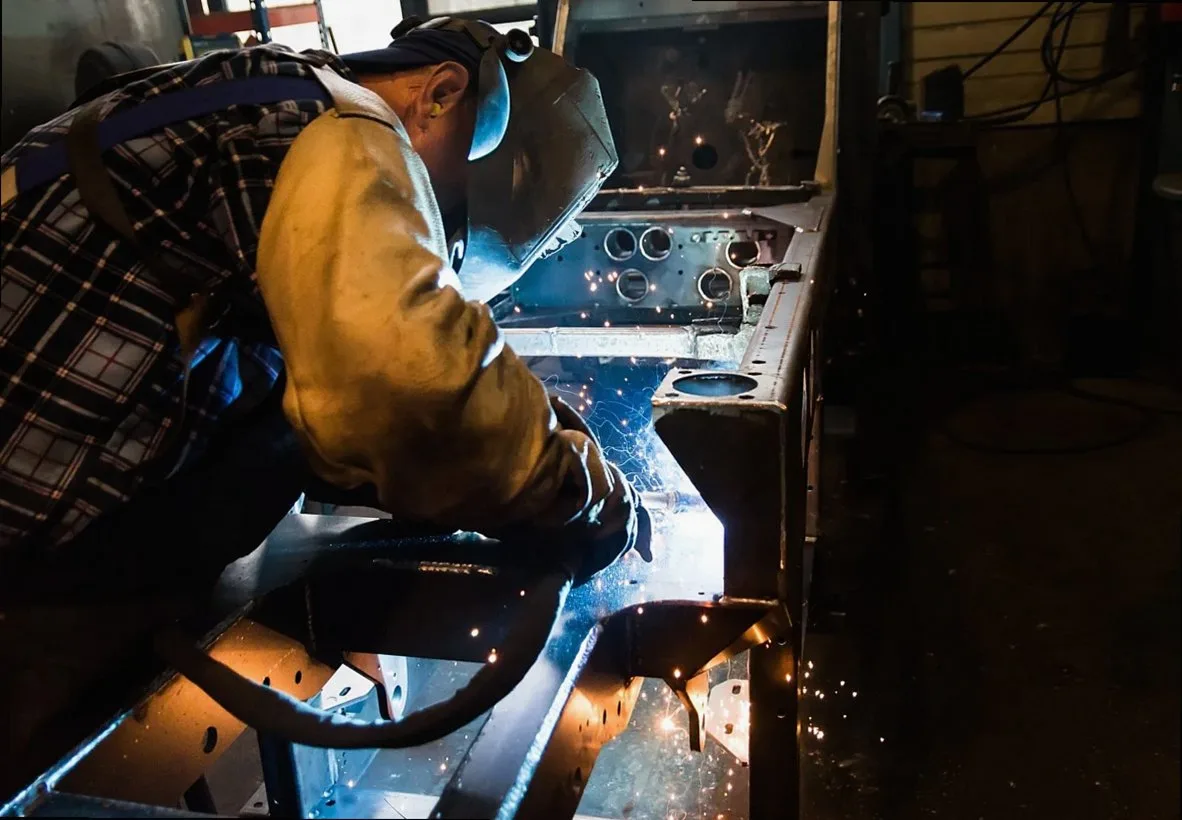
Ask most people what welding is and they will describe the arc, the sparks, the molten pool. The part that actually determines whether a weld will hold is quieter and less photogenic: it is the fit-up, the stage where two pieces of metal are brought together, checked for gap and alignment, and held in position before the arc ever strikes. Get that stage wrong and the weld is already compromised.
What fit-up actually means
Fit-up refers to the geometric relationship between the parts being joined before welding begins. That includes the root gap (the space between the two pieces at the joint face), the root face (the thickness of material left at the bottom of a prepared groove), the bevel angle on groove welds, and the alignment of the two pieces relative to each other.
A root gap that is too tight restricts penetration. One that is too wide causes burn-through or requires excessive filler to bridge, which introduces porosity risk. A misaligned joint creates a stress concentration at the weld toe that can initiate cracking under cyclic load. None of these problems are fixed by welding technique. They are set before the arc strikes.
The tack weld as a commitment
Tack welds are small, temporary welds placed to hold the joint in position while the main weld is completed. They are also the point at which the fit-up becomes fixed. Once the tacks are in, changing the root gap or correcting a misalignment requires grinding them out and starting again.
This is why the inspection step before tacking matters. At Weld Lab Core, every joint is checked with a weld gauge and a straight edge before the first tack goes down. On structural work, the root gap is recorded. It takes an extra few minutes per joint and it eliminates a category of defect entirely.
Common fit-up problems and what causes them
The most frequent fit-up problem in repair work is a gap that varies along the length of the joint because the base metal has distorted from heat or load. The correct response is to close the gap mechanically. With clamps, wedges, or a strongback. Before welding, not to bridge it with extra passes.
On new fabrication, the most common issue is parts cut slightly out of square, so the joint face is not parallel to the mating surface. A half-degree error on a 300 mm plate produces a visible step at the joint that no amount of grinding will fully correct. Checking squareness before cutting, and again before assembly, is the only reliable fix.
How long should fit-up take?
There is no universal answer, but a useful rule of thumb is that fit-up should take at least as long as the welding on a structural joint. On a simple butt weld in flat position on clean, square-cut plate, that might be five minutes each. On a complex multi-member node with four or five incoming members, fit-up might take two hours and welding forty minutes.
The pressure to compress fit-up time is real in production environments. It is also the reason that weld repair work exists as a category. The time saved at fit-up is rarely less than the time spent fixing the result.
Fit-up is not a preliminary step. It is the weld, done before the arc. Everything after it is just filling in what the fit-up has already decided.