MIG, TIG, or stick: choosing the right welding process
The three main arc welding processes. MIG (GMAW), TIG (GTAW), and stick (SMAW). Are not interchangeable. Each has a specific range of materials, thicknesses, and conditions where it performs well, and a range where it does not. Choosing the wrong process does not always produce an obvious failure, but it reliably produces a weld that is harder to make, harder to inspect, and more likely to cause problems in service.
MIG welding: speed and versatility on mild steel
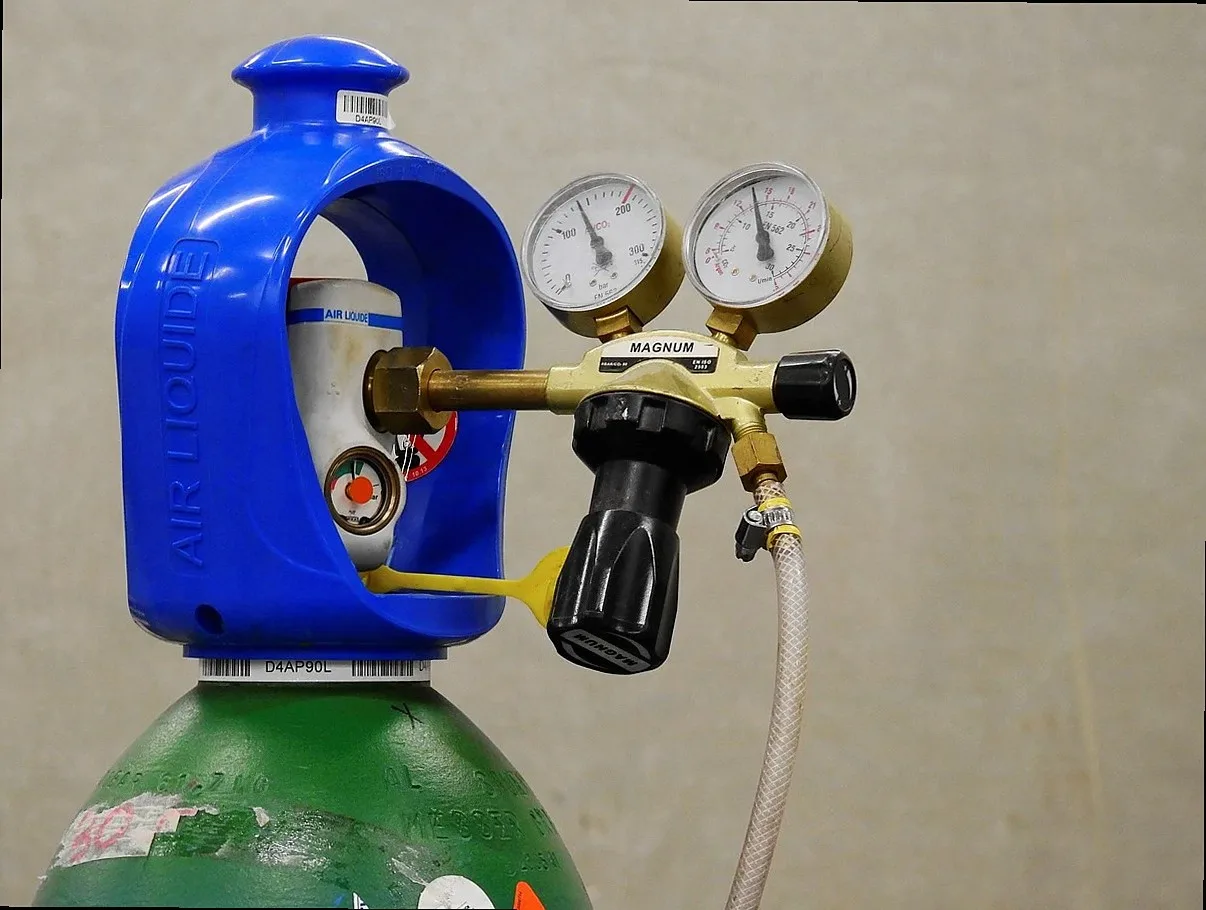
MIG welding feeds a continuous wire electrode through a gun, shielded by a gas mix. Typically 75% argon and 25% CO2 for mild steel, or a higher-argon mix for stainless. It is the fastest of the three processes for most structural and general fabrication work on mild steel from about 2 mm upward.
The limitation of MIG is surface sensitivity. The process does not tolerate mill scale, rust, paint, or moisture well. On repair work where the base metal is contaminated, MIG produces porosity that TIG or stick would not. It also requires a shielding gas supply, which makes it impractical in windy outdoor conditions without a windbreak.
TIG welding: precision on thin or critical material
TIG uses a non-consumable tungsten electrode and a separately fed filler rod. The welder controls both the arc and the filler independently, which gives a level of control that MIG cannot match. On thin material, on stainless, and on aluminium, TIG produces cleaner, more consistent welds with less heat input and less distortion.
The trade-off is speed. TIG is significantly slower than MIG on the same joint, and it requires a higher skill level to maintain consistent results. For food-grade stainless, pharmaceutical tubing, or any application where the weld bead will be visible and the finish matters, TIG is the correct process. For a structural bracket in 10 mm mild steel, it is not the most efficient choice.
Stick welding: the field process
Stick welding uses a flux-coated electrode that provides its own shielding as it burns. There is no gas cylinder, no wire feeder, and no sensitivity to wind. The equipment is simple and portable. For site repairs on agricultural equipment, structural repairs to existing steelwork in exposed locations, and work on heavily contaminated or painted surfaces, stick is often the only practical option.
The flux coating also provides some tolerance for surface contamination that MIG cannot match. On thick structural sections that require preheat, stick with a low-hydrogen electrode (E7018 or equivalent) is the standard approach and has been for decades.
How the process decision gets made at Weld Lab Core
The process is chosen after looking at the material specification, the thickness, the joint geometry, the service environment, and the surface condition of the base metal. On most jobs, one process is clearly correct. On some jobs. A stainless frame with both thin-wall tube and heavy plate sections, for example. Two processes are used on the same part.
The goal is a weld that with the acceptance criteria for the application, made in a way that is controllable and inspectable. Process selection is not a preference; it is an engineering decision.
If you are not sure which process your job needs, send a photo and the material spec. The answer is usually straightforward once the details are on the table.