Welding stainless steel: what makes it different from mild steel
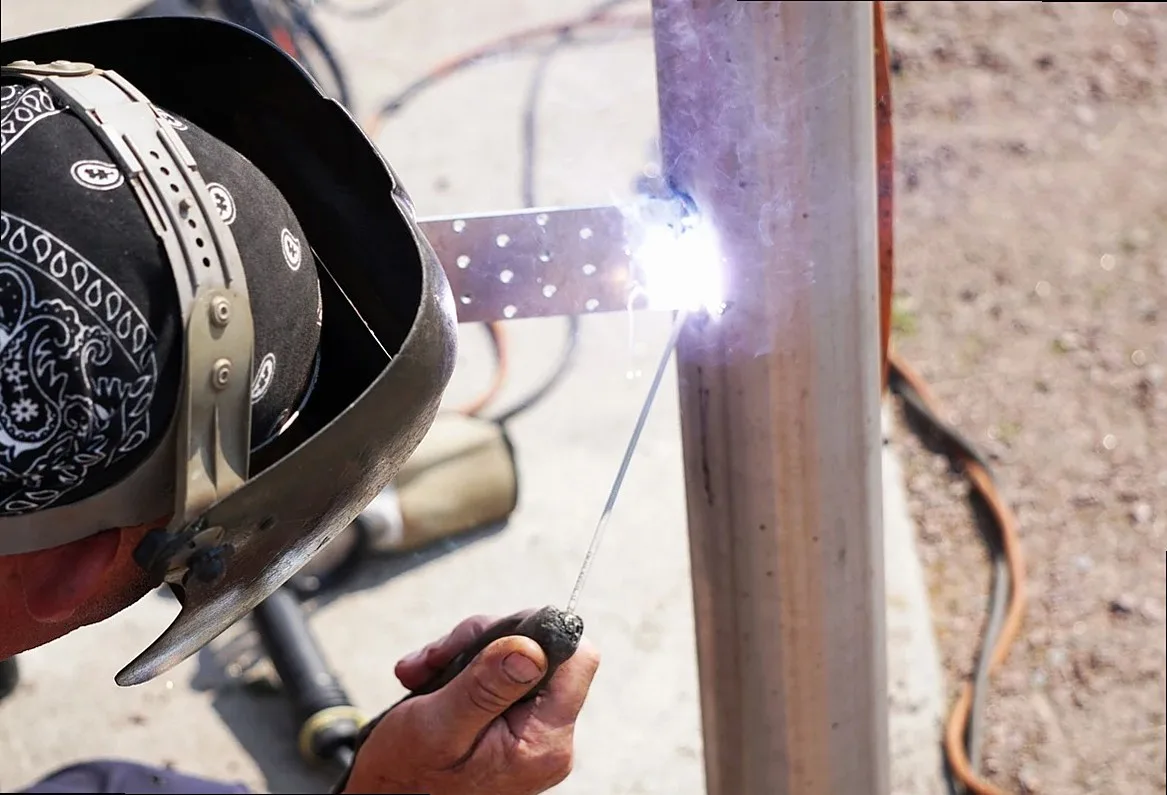
Stainless steel is welded in fabrication shops every day, but it behaves differently from mild steel in ways that matter. The chromium content that gives stainless its corrosion resistance also makes it sensitive to heat, contamination, and the wrong filler metal. Understanding those differences is the starting point for a weld that will actually perform in service.
Heat input and distortion
Stainless steel has lower thermal conductivity than mild steel, which means heat builds up in the weld zone rather than dispersing through the parent metal. The result is more distortion for the same heat input, and a larger heat-affected zone relative to the weld bead.
Controlling heat input on stainless means using lower amperage, shorter arc lengths, and more frequent stops to let the material cool. On thin-wall tube or sheet, this is the primary challenge. A welder who is used to running hot on mild steel will distort a stainless panel badly before realising the problem.
Sensitisation and carbide precipitation
When austenitic stainless steel (the 304 and 316 grades most commonly used in fabrication) is held in the temperature range of roughly 450 to 850 degrees Celsius for too long, chromium carbides form at the grain boundaries. This depletes the chromium in the surrounding metal and reduces its corrosion resistance. A process called sensitisation.
The practical implication is that slow, high-heat welding on stainless can create a zone adjacent to the weld that corrodes preferentially, even though the base metal and the weld itself are fine. Using low-carbon grades (304L, 316L) reduces this risk significantly, which is why they are specified for most welded stainless fabrication.
Contamination and the dedicated tool rule
Stainless steel must be kept free of iron contamination. A grinding disc used on mild steel, then used on stainless, will embed iron particles in the surface that will rust and undermine the corrosion resistance of the whole part. The same applies to wire brushes, clamps, and work surfaces.
At Weld Lab Core, stainless work is done on a dedicated section of the bench with dedicated tooling. Separate grinding discs, separate wire brushes, stainless-specific clamps. It is a simple rule and it is non-negotiable on any job where the corrosion performance of the finished part matters.
Back purging on stainless pipe
On stainless pipe and tube where the inside of the weld is inaccessible after welding, the root pass is made with an argon purge on the back side of the joint. Without the purge, the root bead oxidises. A condition called sugaring. Which creates a rough, porous surface on the inside of the pipe that traps bacteria in food-grade applications and accelerates corrosion in any application.
Purging requires sealing the pipe section around the joint and flowing argon through until the oxygen level drops below about 0.1%. It adds time to the job, but on food-grade or pharmaceutical stainless pipework, it is not optional.
Stainless welding done correctly is not complicated, but it requires consistent attention to heat, contamination, and filler selection at every stage of the job.